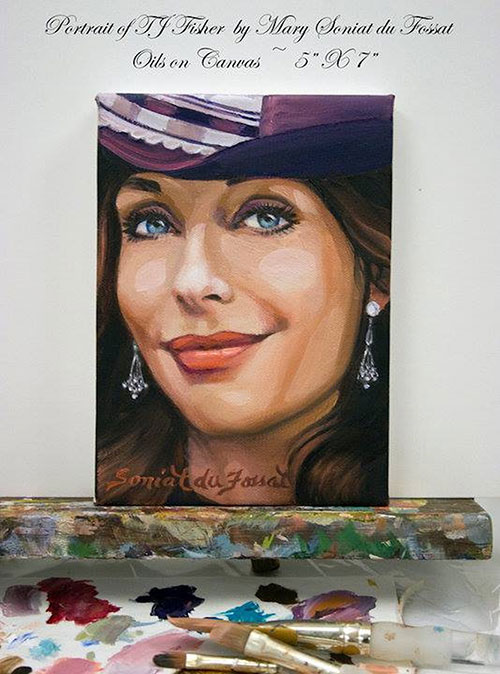
Baby Doll Gombo

NOT YET PUBLISHED
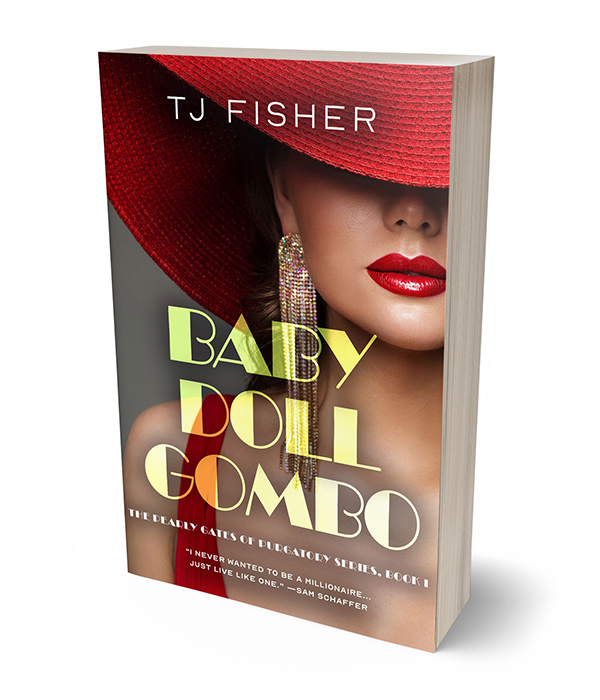
Baby Doll Gombo is the forthcoming first book release in
The Pearly Gates of Purgatory series of 15 continuing novels.
More information and a publication date coming soon.
Check back. Book 1!
“I never wanted to be a millionaire, just live like one.”
— Samara “Sam” Schaffer, the story’s protagonist, main character, narrator
BABY DOLL GOMBO
BOOK SERIES OPENING
Southern Gothic, gritty confessional, explained
Baby Doll Gombo is the first book in a 15-book Southern Gothic-inspired saga, a sprawling novel sequence that mingles semi-autobiography and fiction. (The dynamic book series is meant to be read in sequential order, as the ongoing, overreaching story, character development, details, emotional impact, major plot points, and subplots build on each other, crisscrossing and threading together book by book.) Books are NOT standalone.
Sam’s story starts here!
The story begins in present-day Hollywood and centers on “golden girl” Samara “Sam” Schaffer. She collapses at the Oscars and hovers between life and death. Who is she? A fascinating heroine-antiheroine, a flawed, unreliable narrator with a crime-family legacy in New Orleans, Dallas, and Palm Beach. A black nanny raised her, and one of her daddy’s mob nicknames was “The Crazy Jew.” Backflashes unveil traces of her tumultuous life, including stormy relationships, run-ins with the mob, two husbands, struggles for love and identity, and family tragedy. Come to the masked ball and waltz on the edge of the abyss. Get a taste. Be merry. She reflects on a life marred by inherited curses, trauma, Southern culture, and personal collapse. Yes, sparkling riches deceive. It’s in the DNA. She believes in family curses and heirloom pain, the Biblical notion that sins and suffering are passed down through the generations. Sam claims that her Uptown Garden District grandparents used black magic voodoo hex against her and her Mardi Gras Maid mother, resulting in lifelong bad luck and brushes with death. She’s lived life as a Cinderella-ish high-flier, wait, don’t get your wings singed, and a low-flier, hold on, don’t crash and burn. The self-aware storyteller Sam admits to exaggeration and memory distortions. Smile. It all flows into her stream-of-consciousness reflections. The intermittences of the heart. Jolts! Hold on. Sam captures the contradictions, charm, and dysfunction of Southern heritage—beauty queens, charity balls, voodoo, moral ambiguity, destiny, time, memory, guilt, self-destructive tendencies, violence, broken dreams, mysticism, fizzy drinking, impaired judgment, gaslit marriages, and redemption. The journey between life and death… Dead or damned? Don’t die. Pray. Wake up. Don’t fall asleep. Sunglasses on. All the stars go dim. Bubbles, so many bubbles—the blur of reality, graveyard dust, diamonds, bullets, gold, gris-gris, and glitter. Breathe. Ride on, in that big pink ’59 Caddy convertible.
Sam says, “With murder, the mob, secret societies, and heartbreak in the smudgy rearview mirror, my ride to fame is more twisty than any soap opera. God writes such strange one-way tickets. You can’t make this stuff up. It has been a long road to get here. It’s true, fate forced me to silence my foes, but blood avengers who murder are destined never to forget. God remembers that we are dust…wealth is deceitful. We both know how the story ends. This is my story. Yours truly, in a pink-washed swampland.”
The protagonist Sam’s voice is distinctive and engaging. It immediately draws the reader into her world, and the fragmented, stream-of-consciousness style realistically conveys her state of mind. Evocative prose, a distinctive voice, and an intriguing plot make this a strong opening to a character-driven tale. The saga’s splintered structure and fickle unfolding create a sense of mystery, immersing the reader in Sam’s perspective. Overall, this paves the way for a compelling read.
Telling the same story from a different perspective (POV)!
BABY DOLL GOMBO
Summary
New York, New York, 1987. This explosive novel is an account of the chaotic, myth-soaked life of 25-year-old Sam Schaffer, daughter of a New Orleans Jewish mobster and a conflicted Southern belle. Readers see through her eyes and see things she doesn’t. It reads like an immersive memoir with deep emotion and direct address. Yet, it’s also a darkly humorous, poetic narrative. Sam’s a Yale “Theatre Studies” graduate, with the common sense of table salt. She gets jilted at the altar by her blue-blooded Boston fiancé, due to class, social, and racial prejudices against her and her jailbird daddy, who worked for legendary Crescent City Mafia kingpin Carlos Marcello. Wow. Okay.
Sam reels through heartbreak, loss of status, and mounting debt. Time to call a loan shark and a voodoo priestess. She elevates herself to a Fifth Avenue co-op lifestyle by tapping into both the dangerous world of organized crime and voodoo magic, all the while pursuing stardom in gritty 1980s New York theatre. The narrative blends fact and fiction. Through vivid descriptions of New Orleans and New York, the story explores themes of trauma, identity, secret histories, and resilience in reinventing oneself. The tale blends a lush narrative with the haunting echoes and backdrop of the American South. The work is dense with Southern expressions, eccentricities, metaphors, and blasts of wit and comicalness. Sam is shaped by her daddy’s drunken rogue DNA and Southern Black influences, always feeling like a perennial outsider. An unknown enemy uses voodoo dolls to jinx her.
Wrapped in layered, expressive language, the narrative explores the burdens of ancestry and the search for love and belonging. Dreamlike, dark, magical realism meets hard-edged drama, survival amid crisis and chaos. Sam must make a desperate struggle to evade the Mafia, escape, and reshape her fate. New Orleans remains Sam’s mystical, tragic muse. Raised by a Kosher-Nostra daddy and a beloved Black nanny after her mother died in childbirth, Sam’s life has always featured violence and dysfunction, ping-ponging between privilege and poverty, and Southern superstition. Blond, tall, and flamboyant, she has a distinctive irreverence for rules, a taste for danger, and a penchant for risk-taking. Her fate’s embedded in her bloodline. It’s a fluid boundary across the blurry lines between cultural contradictions and the destructive lure of money and fame. Unforgettable Sam prepares to go on the run and flee the Big Apple, running for her life.

BABY DOLL GOMBO
Author TJ Fisher’s synopsis, with spoilers removed
The end (almost) of The Pearly Gates of Purgatory series begins the story. Present-day Hollywood: “golden girl” Sam rides in an ambulance enroute from the Dolby Theater to the Cedars-Sinai Medical Level 1 Trauma Center for treatment, or to the hospital morgue for storage… She muses that she never wanted to be a millionaire—just live like one. It’s her DNA. Her daddy was a violent drunk, a New Orleans Jewish-American crime figure. All Southerners love illusion; beautiful dreams built on lies.
Sam, the unreliable narrator, is very conflicted. Possibly because fucked up ex-beauty queens see the face of Jesus and mercy in men who don’t look a thing like a savior. She admits that she may mislead you. It’s unclear if she’s dead or alive. What’s going on? Can she be saved? How does the story end? Where does it begin? She remembers she was once 25 years old, 1987, NYC. Go back, go back… Glory be. Time has ceased to move. Memory has left the sky.
Boom. Shout out. Roll call. Inscribe a new page. And just like that. Reboot.
New York stage actress Samara “Sam” Viola Schaffer is in bed at the Waldorf Astoria with her Boston Brahmin Yalie fiancé. Post-coital, wealthy Charles calls off their NYC dream wedding hours before the ceremony. He obeys his white-Anglo-Saxon-Protestant family’s ultimatum to dump her or lose his trust fund. Blonde, bright, and beautiful, Sam isn’t good enough. Nope. Not wife material. Why? Her mobster daddy is in a Louisiana federal prison, a black Baptist woman raised her, she drives her late mother’s 1959 pink Caddy convertible, New Orleans people are into voodoo, and her maid of honor is a gay man. She flees the hotel. The fallout leaves her financially broke. How to begin again. She calls a Mafia loan shark and a voodoo priestess. Find cold comfort. It’s a bad decision.
Flash forward, six months later. Sam and her thespian friend Flavius cruise the streets of Manhattan in her Cadillac Lulabell. Mob man Tony accosts them in traffic. He grabs Flav by the neck. Sam accelerates, hoping to rip off the long arm of the mob. Yes, she borrowed big bucks for her and Miss Mamie to “live the life of Riley” in a swanky 5th Avenue co-op of Episcopalian WASPS. Her yellow lab eats her heirloom jewelry, her loan collateral. Someone or something stalks Sam.
Terrifying Tony has the superintendent let him into Sam’s leased co-op. He makes his sexual intentions clear. The big-vig loan won’t be a platonic business deal after all. Hello. He demands she accompany him on an upcoming trip. No, no way. Her theatrical agent calls after midnight to offer a bizarre last-minute film role, but she must fly to New Orleans immediately. The dark bayou swampland place and hypnotic city of all her ancestral roots–done deal. Sam accepts the role.
Mafioso Tony snatches her into his black limousine before she leaves for the airport. Limo-riding with a monster, she fears she’s headed for the East River or the landfill. Hang on. Breathe. Two young women who don’t speak English are already sitting perched in the car, then a group of Sicilian dons climbs in, too. Oy vey. Not good. Little twinkly lights dot the limo ceiling. Tony issues another chilling warning and then shoves her out. She had better not refuse to comply with his orders. Goodbye.
Sam takes senile Mamie and her elderly nurse with her to New Orleans. They check into a hifalutin’ French Quarter hotel, the Soniat House. Mamie warns her of an old evil in the city. She tells Sam that a friend is taking her to see the carousel “flying horses” at City Park. Fat chance. Sam heads to the film set, and the smoking-hot director enchants her. She visits a tarot card reader in Jackson Square, only to encounter bad juju. Events happen in New Orleans to forever change the course of Sam’s life. Her Hollywood dreams of stardom fly away.
A tragic murder shatters her. Homicide bereavement is intense, infused with shock, grief, and anger. Sam has a complicated mourning. Plus, a faceless killer is on the loose. She vows vengeance. Sam’s past, present, and future take on a new perspective. She tightrope-walks a juggling act on the knife‑edge between a doomed lineage, self‑destruction, and a stubborn, often delusional hope that she can rewrite her fate.
Sam returns to NYC. Flav keeps her going, head above water. He carries in food and booze. He prays and parties. She teeters on the brink, in the land of the living. She dolls up for Flav’s big birthday bash and seduces a new heartthrob. Tony and his goons shove their way into her leased co-op to collect a pound of flesh. He threatens to enslave her to an Arab sheik. Mamma Mia. Sam has a plan, OSA, “Operation Stay Alive.” What comes next?
To be continued… Read Book 2.

BABY DOLL GOMBO
Author TJ Fisher’s insightful and introspective self-annotation
Annotation of first 50 pages: “Gold Cement Dust” opens with the present-day Conclusion and Prelusion for the entire 15-book series. The series’ real end has a surprise twist, of course. The “end” as the “beginning” establishes the unreliable female protagonist/main character/narrator Sam’s POV. The reader must decide if Samara “Sam” Viola Schaffer is dead or alive. Memory overcomes her. Her “voice” and musings foreshadow glimpses of the entire overarching series, i.e., the past.
The protagonist’s opening sentence, “I never wanted to be a millionaire, just live like one, sets the tone for the series and a sweeping decades-long journey of perils, pitfalls, and pleasures.
This literary framing device peeks into her tangled yesteryears. Plenty of turbulence. It’s heavy. It’s revealing. It’s fast and furious. The opening steers the story in reverse. She peers into unwinding snippets of past traumas that color and corrode her life, such as her drunken Jewish mobster daddy.
I, as the author and creator of my characters, had a similar father. His traits were the same as Sam’s daddy’s. This unique premise is at the heart of the story, woven throughout. Sam’s my thinly veiled alter ego, and I draw heavily from real-life personal experiences. These opening passages also bring to life William Faulkner’s concept of the past intruding upon the present, the idea of “The past is never dead…it’s not even past,” and Marcel Proust’s idea of “intermittences of the heart.”
Sam speaks of the menaces and hurts of being duped by snake-oil lies, all the conflicts, sorrows, lost loves, and motivations. Again, I write from familiarity. Pivotal life events and generational family tales are amalgamated and dramatized. I am completely behind the character’s eyes, under her skin, inside her head. She questions the unidentified, persistent voices she hears. The Leading Lady of the series appears as a complex heroine/antiheroine, good and bad. Do we root for her or not? Undetermined. Questions need to be answered. Messed up and confused, perhaps dead or delirious, carried in an ambulance, she cannot decide if she’s in her sixties or age twenty-five. It’s a continuous curlicue loop. The year 1987 is remembered, forecast. Hey, what’s going on?
“Jar of Mirrors” whirls Sam back to the Big 80s, where she’s the first-person retrospective narrator “voice,” telling her story. I grasp the Big 80s, the “greed is good” go-go era. And so, it begins. Reboot. She’s in bed with her NYC preppy jock fiancé, who moans her name. It is revealed early on that grit-and-glamour girl Sam’s a paradoxical character against the grain. She always feels like an “outsider,” a stranger in her own life. She has deeply ingrained incongruities and ambiguities in her moral compass. This is the result of a troubled childhood.
Sam’s daddy’s Jewish Mafia DNA tentacles continue to imprint, affect, impact, and implicate her, with dire decisions and consequences, throughout the series. Her gangster daddy worked for New Orleans Godfather Carlos Marcello. Born motherless and raised by a black Baptist spinster nanny, she’s attracted to voodoo and riches. She looks for love, too. Thematic for “heart of gold” people.
Brainy, buxom beauty “Sam the actress” battles perpetual class warfare. She struggles to navigate a clash of cultural and societal divides with her longtime fancy white-Anglo-Saxon-Protestant (WASP) Yalie fiancé, Charles. She swims against the tide. I resemble a WASP but am not. Charles’ prissy Boston Brahmin family detests Sam, and nothing can change that. Born in Dallas, she’s still a New Orleanian. I have a long, deep, and entrenched history and relationship with all things New Orleans, including my once-famed historic home on Bourbon Street and various family skeletons and scandals. The Baton Rouge-Advocate book editor previously labeled me, “…suitably eccentric and outrageous to represent New Orleans. …knowledgeable about the city and a talented writer.” I write what I know, from the gut, nothing formulistic.
Sassy Sam fears that she’s “not good enough” for the Mayflower-lineage brigade come true. Birth certificates matter, yes. Charles callously dumps her, after a wild sex session in their Waldorf-Astoria suite, just hours before their planned wedding ceremony. Sam gets fucked, literally and figuratively. His mother and father barge into the hotel room to reinforce their ultimatum. Dump the 42nd Street “showgirl” or be disinherited, but money talks. The die is cast. Charles cannot accept her background and “half-Jew” bloodline. Game over. Marriage off. She can still be his girlfriend, but never his wife. This is a modern take on New Orleans’ old system of Plaçage, an exploitive social system of legal concubinage in which wealthy white men entered long-term relationships with mixed-race free women of color.
Being an overly flashy blonde with big boobs, a big ‘59 pink Caddy convertible, and a prison-inmate Jew daddy who participated in the JFK assassination doesn’t fly in the gilded circles of high society. To them, she’s not “our kind of people.” Rich people rule. Sam reacts with chutzpah. Sam’s pink Caddy “Lulabell” is her late mother’s car, and she drives it until the end of the series. My ‘59 pink Caddy was also Lulabell. She tells off Charles and his parents, tosses “grandmummy’s” family heirloom engagement ring at them, then flees the hotel suite in a bathrobe. The hotel maid hands her a voodoo doll found lying in the hallway.
Financially broke but feisty, Sam realizes she must call a loan shark and a voodoo priestess for help. Quick. Yes, been there, done that. Also, I became very familiar with voodoo philosophy and practices during my time spent in Haiti and New Orleans. I already referenced my father. Charles’ unexpected dumping of his bride-to-be at the altar, leaving Sam high and dry, sets off a chain of events.
Flash forward six months, and it’s 1988. The “living large” temporary solace and fancy life Sam stupidly bought with borrowed funds is beginning to come to an end. She miscalculated. The clock is running out. Fast. Henchmen for the Mafia loan shark she borrowed money from started calling. Why? Her debts come due. I have previously owed large debts, once @ $33.3 million, and been beholden to unsavory characters. Time to pay the piper. She and the elderly woman who raised her, Mamie, live in a swanky Fifth Avenue co-op—paid for with high-interest-loan mob money.
Childlike Mamie isn’t cognizant of what’s what. She wants King Cake. Sam’s under the gun, with significant money pressure. What now. Tony isn’t her lover, but he wants to be. Sam can never accept the idea of being a part-time Mafioso mistress. Like me, Sam isn’t for sale, not at any price; she has a particular set of prudish Victorian principles that cannot be violated, no, never. Her life begins to unravel once again, and she crashes off the roller coaster tracks. She isn’t panicked and desperate yet, but… the Costa Nostra bill collector will soon be coming for her.
Sam seeks a miracle to save her. Yes, I believe in miracles, fate, and destiny, as does my character, Sam. My story shows how the boundaries between good and evil, right and wrong, are often movable and blurred. It’s easy for sinners and saints to cross the proverbial line in the sand, either way.
Sam and her bestie thespian friend cruise Manhattan in her big Cadillac Lulabell. I’m a SAG-AFTRA and Actors’ Equity member with a Big Apple personal history. With the top down in winter, they slug champagne straight from the bottle. Flavius, who loves drugging, drinking, nightclubbing, and sleeping around, is gay and giddy but also a Bible-believing Holy Roller. He sings gospel. Flav’s an outlier character. They each buck any stereotypical characterization. Both Yale graduates are displaced Southerners with sketchy pasts, convoluted by trauma, but Sam and Flav are friends in arms. They prop each other up like Barbie and Ken. They’re a twosome. They dream big. Smile. Laugh. Cover up. Be happy. All actors are good at being a fraud.
Much is learned about Sam and Flav, their various peculiarities and difficulties, the life of striving stage actors in Gotham, and how to make ends meet. It takes once being as “poor as Job’s turkey” and alternatively “richer than God” to write these characters. Plus, flawed people of the American South understand Southern Gothic, vice, the macabre, and the mundane. Sam carries a New Orleans red flannel gris-gris pouch in her purse for protection. Charms work. Lulabell gets stuck in a red-light traffic snarl, and the Mafiosi named Tony accosts them. He squeezes Flav’s neck. Stop! Tony’s physical violence is a warning. It’s the real deal. Sam’s a damsel in distress. She made a terrible mistake, turning to a “man of honor” for help in her time of financial need. She could soon be tossed into the river. The Mafia put debtor-victims into 55-gallon oil drums, submerged at the bottom of the East River; to sleep with the fishes, it’s a fact, not fiction. Sicilian Tony is an essential ongoing antagonist in the series; however, he also serves to mislead.
Sam and Flav run late to their Theatre District show, an important play they co-star in. Curtain call, curtains up, stage left, stage right, curtains down. They bicker. Breathe. Sam never told her pal she took big bucks from the mob. Now her dark secret is out. Drama queen Flav is furious. Everyone needs one good friend to kibbitz with. She returns to her ritzy, leased 5th Avenue co-op, home to Episcopalian WASPs. Sam doesn’t fit in. She and unwell Mamie stick out like a sore thumb. I comprehend being shut out of high society and the wounds that Old Money scions can inflict. The blue-blooded bitch neighbor ladies roll their eyes, gossip, and sneer at Sam. Someone or something stalks her. Wickedness is afoot, unleashed.
The building’s uppity uniformed doorman hands her an effigy puppet doll, left for her. Evil poppet thing. Bad omen. Bad juju. A curse? Oh my God. This isn’t good. A spellcaster most likely hexed Sam. Who’s after her? This is serious, not child’s play. Like any religion, voodoo has the most dramatic effect on those who believe in its powers. Mensa-brain Sam has the common sense of table salt. Easily spooked, she’s superstitious but bold and defiant.
Sam has many obstacles to sidestep and outrun. The walls are closing in. The doorman adds that someone spelled her name in chalk and lipstick across the sidewalk. Shades of voodoo thread throughout the series, to the end. Voodoo is double-edged and symbolic in the story, good and evil. Witchcraft and hell are always close by.

ACKNOWLEDGMENT
New Orleans is my soul, my muse, my inspiration. The Crescent City is a city of magical thinking and serendipity. Secrecy, murky enchantment, and menace lurk close by. Here’s to the people, places, and stories of New Orleans, untold, past, present, and future.
Like a flambeau, a beacon, torchlight in time, she threads and unites yesterday, today, and tomorrow. Warm and drowsy, framed by bowing oaks. She appears at rest, beneath a soft sun and shooting stars burnt out. While wild roses bloom, iron fencing keeps guard. Flecks of shadows and time. Universal. Shining golden light. Inviting devotions, weathered footsteps, layered with remembrances, timeless riches and blessings, griefs and sorrows. Beautiful and picturesque, and dark. But forever quaint and beautiful, as of old, and deceptive. Never to be forgotten. Broken-glass portraits that whisper.
Stepping back in memory. The head, heart, and soul shall endlessly remember, not forget. Backlit skies aglow, legacies unclaimed, Bourbon nights, angel trumpet fragrances, sunrise dewdrops, dreamy languors, perfumed vapors, haunting mists, and mysterious shadows.
Time gone, passed by, cannot erase what survivors know—the masked identities, quaint cottages of old, sentinel saints, and slumbering Cities of the Dead. Lingering memories remain. The dusk and dawn of memory. Fragments. All hidden in the mind’s eye. Forever glitters of twilight echoes of what was, what is, what will never be again. Forever and a day, yesterday shimmering, the past reawakened.
St. Louis Cathedral steeple spires and cathedral bells, clouded by Lake Pontchartrain mud in the eye, smeared like bayou mascara. All disappearing. Blown down. Washed way. Melting. Reappearing. Come back. Snow cones, high-water marks, invisible doorsteps, missing rooftops, masquerade balls, crumbled bricks, silent coteries, ancestral tapestries, bands that play on, Mardi Gras, timelessness, prayers at the edge of purgatory, and dancing atop the cracks of doom. Three hundred years of memories. Layered labyrinth.
Hurricane Katrina defined the bonds that cannot be explained or broken. You can take the people out of the city—but not the soul—that remains here.
SPECIAL NOTE
The chronicle of work entitled The Pearly Gates of Purgatory series is a novel sequence; some of it is entirely fictionalized, while certain characters and events are loosely based on dramatized real-life events.
Baby Doll Gombo, Zin-Zin, Flambeau, Quadrilleìe, Tableau, Peristyle, Mascarade, Promenade, Société, ZanseÌt, Repasser, Confrondre, Rouler, Procession, Vieux Gold…
There’s always truth in fiction and fiction in truth. The heart and head are unfaithful companions; the memory lies. Time scrambles and rewrites all stories. Who’s to say what’s real? What happened or not? What is, or was, make-believe? What you choose to believe or not is up to you.
Scandalous people are stirring. Perfection is boring. Family skeletons that cannot be buried must be made to sing and dance.
And so, to be clear, names, dates, places, and timelines have been changed, blurred, and amalgamated to protect the guilty and to hush the innocent.
Highly autobiographical fine fiction is the best way to tell a story… This first-person novel series masquerades as a fake autobiography, “true to life” or not.
DEDICATION
This novel series is dedicated to monsters in the rearview mirror, good fairies and sleeping guardian angels riding in the passenger seat, and mysteries shining through the windshield.
This “work of fiction” is committed to the eccentric Southern ancestry that created and shaped and carved me; to the barbed wire fence chain of friends broken; to scarred family secrets and sagas; to those who loved me and those who did not; to the riptides of time that wash away, but never fully erase buried promises, betrayals and legacies untold.
To my soulmate husband, Mother, Daddy, and Granny; to Bear, a Puss in Boots woman named Kat, the Kingfish and Crepe Myrtle, and furry earth angels called my dogs. Your twilight memories burble in my head, stain my heart, and encrust my soul. I love you still, forever and always.
Thank you, friends, who have shared the secrets, sorrows, and sensations of my spectacular rise and fall into heaven and hell on earth. Thank you for traversing my sodden soil and stepping into the kaleidoscope. You have touched the heartbeat of a tale that echoes the mythic quality of Greek tragedy…a life that echoes a classic Tennessee Williams play, a continuum, set in umpteen acts…an over-the-top Southern Gothic close-up that no novelist would ever dare to pen. Now it is time to move past peering into the past of empty mansions.
I will never understand the puzzle of my yesterdays, todays, and tomorrows, a riddle of time, but I shall never forget the people, places, and things I have loved and lost along the way.
Tomorrow is an unfinished tale of dreams and stories yet to be told.
The ending is never written.